
As summer approaches, many individuals prepare to change their environment and arrange their vacations. Those traveling for business assignments and those who wish to spend time away from work with family and friends are probably planning to safeguard their homes, care for their pets and wrap up loose ends at work. While securing these things is essential, protecting your electronic devices and data while you are away is also crucial.Read more

As cyber threats continue to increase, businesses must take proactive steps (like threat modeling). They need to protect their sensitive data and assets from cybercriminals. Threats to data security are persistent and they come from many different places.
Today’s offices are digitally sophisticated. Just about every activity relies on some type of technology and data sharing. Hackers can breach these systems from several entry points. This includes computers, smartphones, cloud applications and network infrastructure.
It is estimated that cybercriminals can penetrate 93% of company networks.
One approach that can help organizations fight these intrusions is threat modeling. Threat modeling is a process used in cybersecurity. It involves identifying potential threats and vulnerabilities to an organization's assets and systems.
Threat modeling helps businesses prioritize their risk management and mitigation strategies. The goal is to mitigate the risk of falling victim to a costly cyber incident.
Here are the steps businesses can follow to conduct a threat model.
Identify Assets That Need Protection
The first step is to identify assets that are most critical to the business. This includes sensitive data, intellectual property or financial information. What is it that cybercriminals will be going after?
Don’t forget to include phishing-related assets such as company email accounts. Business email compromise is a fast-growing attack. It capitalizes on breached company email logins.
Identify Potential Threats
The next step is to identify potential threats to these assets. Some common threats could be cyberattacks such as phishing. Others would be ransomware, malware or social engineering.
Another category of threats could be physical breaches or insider threats. This is where employees or vendors have access to sensitive information.
Remember that threats aren’t always malicious. Human error causes approximately 88% of data breaches. So, ensure that you are aware of mistake-related threats such as:
- The use of weak passwords
- Unclear cloud use policies
- Lack of employee training
- Poor or non-existent BYOD policies
Assess Likelihood and Impact
Once you have identified potential threats, take the next step. This is to assess the likelihood and impact of these threats. Businesses must understand how likely each threat is to occur as well as the potential impact on their operations, reputation and financial stability. This will help rank the risk management and mitigation strategies.
Base the threat likelihood on current cybersecurity statistics as well as a thorough vulnerability assessment. It is best this assessment is performed by a trusted 3rd party IT service provider. If you are doing your assessment with only internal input, you are bound to miss something.
Prioritize Risk Management Strategies
Prioritize risk management strategies next. Base this on the likelihood and impact of each potential threat. Most businesses can’t tackle everything at once due to time and cost constraints. So, it is important to rank solutions based on the biggest impact on cybersecurity.
Some common strategies to consider include implementing:
- Access controls
- Firewalls
- Intrusion detection systems
- Employee training and awareness programs
- Endpoint device management
Businesses must also determine which strategies are most cost-effective. They should also align with their business goals.
Continuously Review and Update the Model
Threat modeling is not a one-time process. Cyber threats are constantly evolving. Businesses must continuously review and update their threat models. This will help ensure that their security measures are effective as well as aligned with their business objectives.
Benefits for Businesses
Threat modeling is an essential process for businesses to reduce their cybersecurity risk. Identifying potential threats and vulnerabilities to their assets and systems is important. It helps them rank risk management strategies as well as reduce the likelihood and impact of cyber incidents.
Here are just a few of the benefits of adding threat modeling to a cybersecurity strategy.
Improved Understanding of Threats and Vulnerabilities
Threat modeling can help businesses gain a better understanding of specific threats. It also uncovers vulnerabilities that could impact their assets. It identifies gaps in their security measures and helps uncover risk management strategies.
Ongoing threat modeling can also help companies stay out in front of new threats. Artificial intelligence is birthing new types of cyber threats every day. Companies that are complacent can fall victim to new attacks.
Cost-effective Risk Management
Addressing risk management based on the likelihood and impact of threats reduces costs. It can optimize company security investments. This will help ensure that businesses divide resources effectively and efficiently.
Business Alignment
Threat modeling can help ensure that security measures align with the business objectives. This can reduce the potential impact of security measures on business operations. It also helps coordinate security, goals and operations.
Reduced Risk of Cyber Incidents
By implementing targeted risk management strategies, businesses can reduce risk. This includes the likelihood and impact of cybersecurity incidents. This will help to protect their assets. It also reduces the negative consequences of a security breach.
Get Started with Comprehensive Threat Identification
Wondering how to get started with a threat assessment? Our experts can help you put in place a comprehensive threat modeling program. Give us a call today to schedule a discussion.
In today's digital landscape where cyber threats lurk around every corner, the new breed of phishing scams demands close attention. Bracing yourself for the rising wave of these phishing scams has become essential. Read more

What would you do if your business suffered a ransomware attack tomorrow? Do you have a contingency plan in case of a tornado, hurricane or earthquake? The unexpected can happen anytime and small businesses can get hit particularly hard.
Small businesses are the backbone of many economies. They are critical for job creation, innovation and community development. However, running a small business comes with significant risks. This includes financial uncertainty, market volatility and natural disasters.
60% of small businesses fail within 6 months of falling victim to a cyberattack.
Small business owners must prepare for the unexpected. This is to ensure their longevity and success. In this article, we will discuss some tips to help small businesses get ready for anything.
1. Create a Contingency Plan
One of the most critical steps in preparing for the unexpected is to create a contingency plan. A contingency plan is a set of procedures that help a business respond to unforeseen events such as natural disasters, supply chain disruptions or unexpected financial setbacks.
The plan should outline the steps the business will take in the event of an emergency and include who will be responsible for what tasks as well as how to communicate with employees, customers and suppliers.
2. Maintain Adequate Insurance Coverage
Small businesses should always maintain adequate insurance coverage. This protects them from unexpected events. Insurance policies should include things like:
- Liability coverage
- Property damage coverage
- Business interruption coverage
- Data breach costs
Business interruption coverage is particularly important. It can help cover lost income and expenses during a disruption such as a natural disaster or supply chain disruption.
One of the newer types of policies is cybersecurity liability insurance. In today’s threat landscape, it has become an important consideration. Cybersecurity insurance covers things like costs to remediate a breach and legal expenses.
3. Diversify Your Revenue Streams
Small businesses that rely on a single product or service are at greater risk. Unexpected events can cause them significant harm. Something like a raw material shortage could cripple an organization without alternatives.
Diversifying your revenue streams can help reduce this risk. It ensures that your business has several sources of income. For example, a restaurant can offer catering services. A clothing store can sell merchandise online as well as its physical location.
4. Build Strong Relationships with Suppliers
Small businesses should build strong relationships with their suppliers. This ensures that they have a reliable supply chain. This is particularly important for businesses relying on one supplier for their products.
In the event of a disruption, having strong relationships matters. It mitigates the risk of a supplier bankruptcy or supply chain issue. Having supplier options can help reduce the impact on your business.
5. Keep Cash Reserves
Small businesses should keep cash reserves to help them weather unexpected events. Cash reserves can help cover unexpected expenses such as repairs, legal fees or loss of income. As a general rule of thumb, businesses should keep at least six months' worth of expenses in cash reserves.
6. Build Strong Outsourcing Relationships
If business owners try to do everything in house, they’re at higher risk. For example, if a key IT team member quits. In this case, the company could face major security issues.
Build strong outsourcing relationships with an IT provider and other critical support services. If something happens to a company’s staff or systems, they have a safety net.
7. Check Your Financials Regularly
Small business owners should check their finances regularly. This is to ensure that they are on track to meet their goals and to identify any potential issues early on.
This includes:
- Tracking income and expenses
- Creating and reviewing financial statements
- Regularly meeting with a financial advisor
8. Invest in Technology
Investing in technology can help small businesses prepare for unexpected events. For example, cloud-based software can help businesses store their data off-site. This ensures that it is safe in the event of a natural disaster or cyber-attack. Technology can also help businesses automate processes. Automation reduces the risk of errors and improves efficiency.
9. Train Employees for Emergencies
Small businesses should train their employees for emergencies. This helps ensure that everyone knows what to do in the event of an unexpected event.
This includes training for natural disasters, cyber-attacks and other emergencies. Businesses should also have a plan for communicating with employees during an emergency as well as ensure that everyone has access to the plan.
10. Stay Up to Date on Regulatory Requirements
Small businesses should stay up to date on regulatory requirements. This helps ensure that they are compliant with all laws and regulations. This includes tax laws, labor laws and industry-specific regulations. Non-compliance can result in fines, legal fees and damage to your business's reputation.
In conclusion, small businesses face many risks. By following these tips, they can prepare themselves for the unexpected.
Improve Business Continuity & Disaster Preparedness
Get started on a path to resilience and protect your business interests. We can help you prepare for the unexpected. Give us a call today to schedule a chat.
In today's world, technology is ubiquitous and connectivity is a must. Securing your home network has become more critical than ever. A secure home network is essential for protecting your personal data from hackers.
From phishing to smishing (SMS phishing), it is getting harder to avoid a breach. Individuals often have fewer safeguards in place at home than at work. However, many are working from home which puts both personal and company data at risk.
About 46% of businesses saw at least one cybersecurity incident within two months of moving to remote work.
The good news is that there is no lack of materials on home network security. Many of the steps are straightforward and can help you avoid a data breach at home.
The National Security Agency (NSA) has provided some best practices. These are for securing your home network. We will highlight some of the most helpful tips below.
1. Change Default Passwords and Usernames
The first step to secure your home network is to change the default login. This means changing the passwords and usernames of your router and connected devices. Default passwords and usernames are often well-known to hackers. Criminals can easily use them to access your data. Changing these default credentials is an essential step in securing your home network.
2. Enable Encryption
Encryption is a process of encoding information. This is in such a way that only authorized parties can read it. Enabling encryption on your home network is crucial to protect your data. It keeps hackers from intercepting and reading it. Most modern routers support encryption protocols such as WPA2 or WPA3. Ensure that you use the latest encryption standard (which would be WPA3 used in Wi-Fi 6 routers).
3. Update Firmware
The firmware is the software that runs on your router and other connected devices. Manufacturers release firmware updates to fix security vulnerabilities and add new features. Updating the firmware on your router is important to securing your home network. You can usually check for firmware updates from the router's web interface. You can also find updates on the manufacturer's website.
This is critical to remember because a lot of people never do this. They only see the router app during setup and rarely go back unless there is a need. Set a calendar item to check your router app at least once per month for updates.
4. Enable Firewall
A firewall is a network security system that monitors and controls network traffic. This includes both incoming and outgoing traffic. Enabling a firewall on your router can help protect your network. It defends against malicious traffic and unauthorized access. Most modern routers have a built-in firewall. You can typically enable this through the router's web interface.
5. Disable Unused Services
Most routers come with a range of services that manufacturers enable by default. These services can include file sharing, remote management and media streaming. Disabling any unused services can reduce the risk of a hacker exploiting them. They often use these services to gain access to home networks. Only enable services that you need and are essential for your network.
6. Secure Wi-Fi Network
Your Wi-Fi network is one of the most critical aspects of your home network. Securing your Wi-Fi network involves several steps. These include:
- Changing the default SSID (network name)
- Disabling SSID broadcast
- Enabling MAC address filtering
- Disabling WPS (Wi-Fi Protected Setup)
These steps can help prevent unauthorized access to your Wi-Fi network. If you need help with these steps, let us know. We can save you some time and frustration and ensure your network is properly secured.
7. Use Strong Passwords
Passwords are a critical component of any security system. Using weak or easily guessable passwords can make your network vulnerable. Ensure that you use strong passwords for your router and other connected devices. A strong password should be at least 12 characters long. It should also include a combination of upper and lowercase letters as well as at least one number and one symbol.
8. Create a Guest Network
Do you have guests who need to access your Wi-Fi network? If so, create a separate guest network. A guest network is a separate Wi-Fi network that guests can use. This gives them access the internet without accessing your primary network. This can help protect your primary network from potential security threats.
9. Limit Physical Access
Physical access to your router and other connected devices can be a security risk. Ensure that you place your router in a secure location such as a locked cabinet or a room with limited access. Also, ensure that you disable physical access to the router's web interface. This is even more important if you have guests or children who may tamper with the settings.
Schedule a Home Cybersecurity Visit Today
Securing your home network is essential for protecting your personal data from threats. By following the best practices, you can ensure that your network is better protected.
Want to save some time and have us do the heavy lifting? Give us a call today to schedule a home cybersecurity visit.

Social media is now the new market. It is where every company sales rep vies for customers’ attention. It is now common to find businesses looking to hook their customers right from social media. Digital products and services can only be sold online and that means a total traditional market bypassing. Hence, social media platforms like Facebook, Instagram, LinkedIn and TikTok are introducing new marketing features to support business engagement and increase platform use.Read more
Cloud account takeover has become a major problem for organizations. Think about how much work your company does that requires a username and password. Employees end up needing to log into many different systems or cloud apps.
Hackers use various methods to get those login credentials. The goal is to gain access to business data as a user as well as launch sophisticated attacks and send insider phishing emails.
How bad has the problem of account breaches become? Between 2019 and 2021, account takeover (ATO) rose by 307%.
Doesn’t Multi-Factor Authentication Stop Credential Breaches?
Many organizations and individuals use multi-factor authentication (MFA). It is a way to stop attackers that have gained access to their usernames and passwords. MFA is very effective at protecting cloud accounts and has been for many years.
It is that effectiveness that has spurred workarounds by hackers. One of these nefarious ways to get around MFA is push-bombing.
How Does Push-Bombing Work?
When a user enables MFA on an account, they typically receive a code or authorization prompt of some type. The user enters their login credentials. Then the system sends an authorization request to the user to complete their login.
The MFA code or approval request will usually come through some type of “push” message. Users can receive it in a few ways:
- SMS/text
- A device popup
- An app notification
Receiving that notification is a normal part of the multi-factor authentication login. It is something the user would be familiar with.
With push-bombing, hackers start with the user’s credentials. They may get them through phishing or from a large data breach password dump.
They take advantage of that push notification process. Hackers attempt to log in many times. This sends the legitimate user several push notifications (one after the other).
Many people question the receipt of an unexpected code that they didn’t request. However, when someone is bombarded with these, it can be easy to mistakenly click to approve access.
Push-bombing is a form of social engineering attack designed to:
- Confuse the user
- Wear the user down
- Trick the user into approving the MFA request to give the hacker access
Ways to Combat Push-Bombing at Your Organization
Educate Employees
Knowledge is power. When a user experiences a push-bombing attack it can be disruptive and confusing. If employees have education beforehand, they will be better prepared to defend themselves.
Let employees know what push-bombing is and how it works. Provide them with training on what to do if they receive MFA notifications that they didn’t request.
You should also give your staff a way to report these attacks. This enables your IT security team to alert other users. They can then also take steps to secure everyone’s login credentials.
Reduce Business App “Sprawl”
On average, employees use 36 different cloud-based services per day. That is a lot of logins to keep up with. The more logins someone needs to use means the greater the risk of a stolen password.
Take a look at how many applications your company uses. Look for ways to reduce app “sprawl” by consolidating. Platforms like Microsoft 365 and Google Workspace offer many tools behind one login. Streamlining your cloud environment improves security and productivity.
Adopt Phishing-Resistant MFA Solutions
You can thwart push-bombing attacks altogether by moving to a different form of MFA. Phishing-resistant MFA uses a device passkey or physical security key for authentication.
There is no push notification to approve with this type of authentication. This solution is more complex to set up but it is also more secure than text or app-based MFA.
Enforce Strong Password Policies
For hackers to send several push-notifications, they need to have the user’s login. Enforcing strong password policies reduces the chance that a password will get breached.
Standard practices for strong password policies include:
- Using at least one upper and one lower-case letter
- Using a combination of letters, numbers and symbols
- Not using personal information to create a password
- Storing passwords securely
- Not reusing passwords across several accounts
Put in Place an Advanced Identity Management Solution
Advanced identity management solutions can also help you prevent push-bombing attacks. They will typically combine all logins through a single sign-on solution. Users then have just one login and MFA prompt to manage instead of several.
Additionally, businesses can use identity management solutions to install contextual login policies. These enable a higher level of security by adding access enforcement flexibility. The system could automatically block login attempts outside a desired geographic area. It could also block logins during certain times or when other contextual factors aren’t met.
Do You Need Help Improving Your Identity & Access Security?
Multi-factor authentication alone isn’t enough. Companies need several layers of protection to reduce their risk of a cloud breach.
Are you looking for some help to reinforce your access security? Give us a call today to schedule a chat.
The COVID-19 pandemic has resulted in a significant shift towards remote work. As businesses continue to adapt to the new normal, remote work is becoming increasingly common. While remote work has several benefits such as increased flexibility, it also presents significant cybersecurity risks. Cybersecurity threats are on the rise and remote work has created new opportunities for cybercriminals to exploit vulnerabilities.Read more

Moving an office can be a huge task with several factors to consider (including transportation logistics, finding a new location and coordinating employees' movements). One of the most critical aspects of moving an office is ensuring that all the technology is transported safely and effectively. Read more
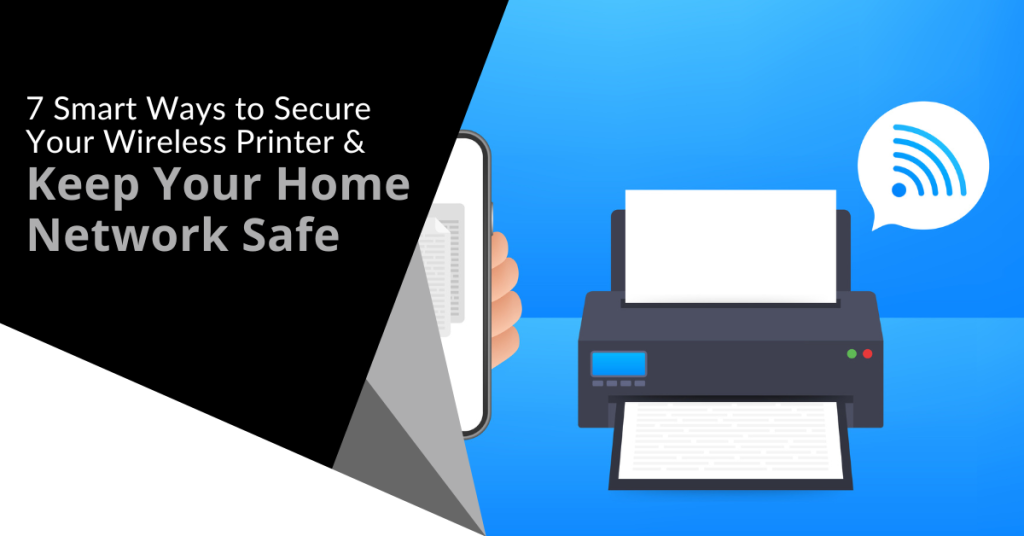
Many people worry about someone hacking their computer. However, they are not really thinking about their wireless printer getting breached. It is a tool that most individuals use sporadically like when you want to print out tax forms or mailing labels.
Printers tend to be out of sight, out of mind. That is until you need to print something and run out of ink. They not out of the mind of hackers. In fact, unsecured printers are a classic way for criminals to gain access to a home network.
To illustrate this point, Cybernews purposely hacked printers. It hijacked nearly 28,000 unsecured printers globally. The success rate was 56%. What did it do once it gained access? It made the printers print out a guide on printer security.
Are you wondering how exposed your network is from your printer? We have some security tips below to help. These tips can enable you to better secure your network and keep data on all devices more secure.
1. Change the Default Login Credentials
When you buy a new wireless printer, it will likely have included default information. Manufacturers give you a way to connect and set up your device. This usually involves default login information.
Immediately change that information during set up. Hackers use a master list of all these defaults. They plug it into an automated script and just keep trying them all until they get a hit. Change these and make sure you create a strong password.
2. Keep Printer Firmware Updated
Keeping firmware updated is vital to keeping your wireless printer secure. Hardware needs updating just like computers, software and apps do. Those updates often contain important security patches.
Firmware updates aren’t usually as visible as software updates. Software and OS updates usually give you a popup notification. However, updates to the drivers and firmware that run printers aren’t so visible.
Some of the places you can check for firmware updates are:
- The PC manufacturer’s utility app on a connected device
- The printer’s information panel
- The printer manufacturer’s app installed on a PC
3. Use a Network Firewall
A network firewall is important to ensure the monitoring of traffic. Firewalls can block suspicious activity to keep hackers out of your network. You should configure the firewall to watch incoming and outgoing printer traffic.
4. Put Your Printer on a Guest Network
Most of today’s home routers allow you to set up a guest network. This is a separate Wi-Fi that runs from the same router you use for your main network. It is harder for hackers to get from one network to another.
Keeping a less secure device separated from computers and phones improves security. You can still print to your printer from devices on another network. You just need to have things configured correctly. If you need help with that, let us know.
5. Disable Unused Ports or Services
IoT devices (like printers) often have many ways to connect. You may not need all the ports or services that come with your printer. These ports are risk areas where hackers could find a way in.
It is best to disable any ports and sharing features that you don’t need. This reduces the risk of a breach.
6. Unplug It When Not in Use
Most home printers aren’t used as much as work printers. People may only use them once a month or a few times a year. If you are not using your printer constantly, unplug it when not in use.
One surefire way to cut off a hacker’s access is to unplug the device. When it is shut down, no access is available at all.
7. Teach Your Family Cybersecurity Best Practices
Your printer is one device on your network. Most families connect several devices to their home Wi-Fi. In 2022, the average number of connected devices per U.S. household was 22.
Families need to know and adopt good cyber habits. This keeps everyone’s data more secure. It also helps you avoid costly identity theft breaches or the takeover of things like baby monitors.
Some standard best practices to follow for good cyber hygiene are:
- Always use strong passwords (at least 10-12 characters & include a mix of letters, numbers and symbols).
- Keep software & firmware on devices updated.
- Use multi-factor authentication wherever possible.
- Enable device firewalls & other protections.
- All devices that should have a good antivirus installed.
- Never login to an account from a link you receive via email or text.
- Learn how to identify phishing & get a second opinion before clicking.
- Get a security checkup from a pro at least every year or two.
Get Some Help Keeping Your Family’s Data Secure
IT pros don’t only work with businesses. We also help families ensure their data is safe & devices are running smoothly. Give us a call today to schedule a home security checkup.