
In today’s rapidly evolving business landscape, the integration of smart office technology has become more than just a trend. It is a necessity. The right technology can streamline operations, improve productivity and enhance the overall work environment. Read more
In today's ever-evolving digital landscape, small businesses have more opportunities than ever. Many of these call for leveraging technology to their advantage. Embracing the right tech trends can help businesses compete. It enables them to streamline operations, enhance customer experiences and fuel growth.
However, it can be confusing trying to figure out which routes to take. Most small businesses need to choose the route that is going to bring the biggest return.
We will explore five small business tech trends. These trends have the potential to drive success as well as propel your business forward in an increasingly competitive market.
1. Cloud Computing: Expanding Possibilities
Cloud computing has emerged as a game-changer for businesses of all sizes and some believe small businesses have the most to gain from it. 82% of small to medium businesses report reduced costs after adopting cloud tools.
The cloud offers many benefits. It is a cost-effective and scalable solution for data storage, software access and collaboration. By migrating to the cloud, small businesses can save. They cut the need for on-premises infrastructure. This reduces maintenance costs and gives enhanced flexibility.
Also, cloud-based tools and platforms enable teams to work remotely. This can promote collaboration and improve productivity. Working in the cloud offers access to real-time data and apps from any location. This enables small businesses to make informed decisions faster. They can also respond to market changes with agility.
2. Artificial Intelligence: Automating Efficiency
Artificial Intelligence (AI) has revolutionized the way businesses operate. This year alone ChatGPT has completely transformed many business apps. We cannot overstate AI’s potential benefits for small businesses.
AI-powered tools and algorithms can automate routine tasks such as data entry, customer service and inventory management. This frees up valuable time for employees to focus on higher-value activities.
For example, chatbots enable small businesses to provide 24/7 customer support. This is all without the need for more staff or paying overtime hours.
AI also empowers businesses to gain actionable insights from vast amounts of data. This helps them optimize processes, personalize marketing strategies and enhance customer experiences.
Embracing AI technologies can give small businesses a competitive edge. It does this by boosting efficiency, reducing costs and improving decision-making.
3. E-commerce and Mobile Commerce: Expanding Reach
The rise of e-commerce and mobile commerce has opened up new avenues for small businesses. They can now easily reach a global audience. Using websites and apps, companies can sell anywhere at any time.
It is easier than ever to put up a secure payment gateway and take payments online. These “plug-and-play” e-commerce sites and apps can create a seamless user experience. This allows small businesses to build trust and encourage repeat purchases.
Businesses can easily understand customer preferences by leveraging data analytics. They can also optimize inventory management and personalize marketing campaigns.
By embracing e-commerce and mobile commerce, small businesses can grow quickly. They can extend their reach beyond geographical boundaries as well as tap into new markets and fuel growth opportunities.
4. Data Security: Safeguarding Trust
As businesses increasingly rely on digital technologies, data security becomes paramount. Small businesses are just as vulnerable to cyber threats as larger enterprises. This makes it essential to prioritize data security measures.
46% of all data breaches impact businesses with less than 1,000 employees.
It is important to put robust cybersecurity practices in place. This includes things like:
- Encryption
- Multi-factor authentication
- Regular data backups
- Endpoint protection
- Identity and access management
- Advanced threat protection
Additionally, two more tactics to proactively manage risks include:
- Staying informed about emerging threats
- Investing in employee training
Customers value businesses that focus on their data security. A strong security posture can instill trust and confidence. This leads to long-term customer loyalty and positive brand reputation.
5. Automation and Workflow Integration: Streamlining Operations
Automating business processes can significantly streamline operations. When small businesses integrate workflows, they save time and money. Workflow automation eliminates repetitive manual tasks. It also reduces human error and enhances efficiency.
Think about integrating various systems and applications such as customer relationship management (CRM), project management and accounting software. Integration can end silos and ensure seamless information flows across different departments.
Other benefits include:
- Enabling better coordination
- Fostering collaboration
- Optimizing resource allocation
- Improving productivity
- Enhancing customer satisfaction
Small businesses that leverage automation and workflow integration gain a competitive advantage. They operate more efficiently and deliver superior experiences to their customers
Take an Important Step Toward Digital Growth
In today's digital era, small businesses have a ton of tech tools and trends at their disposal. However, it takes guidance to know what to do and how to do it.
While embracing cloud computing, AI, e-commerce, data security and automation can help. Small businesses need a clear and affordable path to stay competitive. The path should makes sense for their business goals.
We can be your digital transformation guide.
Give us a call today to schedule a chat about tech solutions to fuel your growth.

In a world where technology is at the forefront of nearly every business operation, finding ways to integrate sustainability into your tech practices can benefit the environment as well as your bottom line. Embracing sustainable technology practices doesn’t need to be a daunting task. It can be a strategic move that saves you money, improves operational efficiency and demonstrates your commitment to responsible business practices. Read more

In today’s digital age, the demand for multitasking and productivity has led to the popularity of multi-monitor setups. With the ability to expand your workspace and have multiple applications visible simultaneously, a two-monitor setup has become a favored choice for professionals, gamers and creative individuals alike. Read more

In today's interconnected world, technology plays a central role in our daily lives. From smartphones and smart speakers to laptops and tablets, we rely on these devices for communication, entertainment and productivity. Read more
The world we live in now is not the world we were born into. This is because technology has taken over and shows no sign of stopping. In recent years, technology has transformed the way we interact with others, the way we conduct business, the way we shop and the way we live and work. It has become an intrinsic part of our daily routine and is now an essential component of life. Read more
Customers look for convenience. In today’s world that means technology that makes their life easier. From webforms to POS systems, you need to keep the customer experience in mind in all you do.
When people aren’t happy with their experience interacting with a company, they leave. Their experience might not have anything to do with your products or services. Maybe they found it hard to navigate your website. They may have a question but no one was around to answer it.
Customers expect you to make it easy for them to do business with you. Companies that make things easy reap the benefits. Customer-centric companies are 60% more profitable than those that are not.
Technology is key to converting website visitors into clients. It is also key for keeping customers happy and returning to buy again.
Where should you focus? Below are several ideas for all business budgets.
Cloud Forms
Are you still emailing forms in Microsoft Word to your customers? Using cloud-based forms makes the experience much better. Your customer doesn’t need to save a form to their computer and remember to email it back. Instead, they can follow a link and fill out the info online from any device.
Moving your forms to the cloud makes it easier for you as well. The form data comes in automatically. These systems also collate forms and provide analytics.
If you use Microsoft 365, you already have a cloud form tool. Look for Microsoft Forms in your available applications or visit Microsoft’s site.
Digital Signatures
Experts expect the use of eSignatures to grow by 69% by 2024. The ability to digitally sign documents means more contracts get signed. People don’t need to print out a form, sign it and scan it back in. Any of those activities could mean a bump in the road.
Printers run out of ink. People have trouble with a scanner they rarely use. The list goes on. Any problem can mean a customer rethinks signing a document that you need.
Using digital signatures streamlines the process. You can handle the transaction online. You also ensure you have a legally binding signature.
Smart Chatbot
When someone makes a buying decision, they often have a question. If they don’t have a quick and easy way to get an answer, they may go elsewhere.
Chatbots are really smart these days. If you program them right, they can answer a large percentage of repeat questions. They are there 24/7 on your website ready to help in a moment of need.
Many customers actually like them. About 68% of consumers are happy using helpful chatbots. They say they like that they get a fast answer from a bot. This isn’t always the case when customers send an email.
SMS Notifications
SMS notifications are another type of technology that can improve customer experience. Emails have become flooded with junk mail. When someone needs to know about a shipment or purchase, they often prefer it by text. This way the message isn’t missed.
Think about implementing SMS notifications for important customer alerts. Make sure you have an opt-in and opt-out method. It is also a best practice to let the customer choose which alerts they want to receive (such as payment notifications, sales or shipping details).
Business Mobile App
People have been in a transition from websites to apps for some time. The internet isn’t going away but apps are gaining ground. A big reason for this is the rise of smartphone use.
Smartphone searches are overtaking web searches and when people are on a mobile device they prefer apps over websites. Studies show that mobile users spend 90% of their time using apps and just 10% using an internet browser.
Think about implementing a mobile app for your business. This can make it easier for customers to do business with you. It also gives you more marketing and service capabilities such as push notifications.
If you are on a tight budget, you could start with a “wrapper” app. These are solutions that take your existing website and transform it into an app.
FAQ Kiosk
For retail stores, having an FAQ kiosk available can provide a positive experience. It can allow customers to get questions answered quickly. It could also help them look up sales and coupons.
Service businesses can also benefit by using this digital tool. They can use it for commonly asked questions. They can also use it to direct clients to staff offices.
VoIP Phone System
You might think of your phone system as an internal piece of IT. It is also one of your most customer-facing technologies. The experience people get when they call is a vital part of how they view your business.
VoIP phone systems give staff the flexibility to help customers anywhere. This is true even when away from their desks. They also enable things like group ring, auto-attendant and voicemail to email. All these features make for better caller interaction with your business.
Get Help Planning Your Technology Roadmap
Which technology upgrades will benefit your bottom line the most? How should new systems integrate into existing solutions? These are some of the things we look at when helping you look ahead to the future. Give us a call today to schedule a chat.
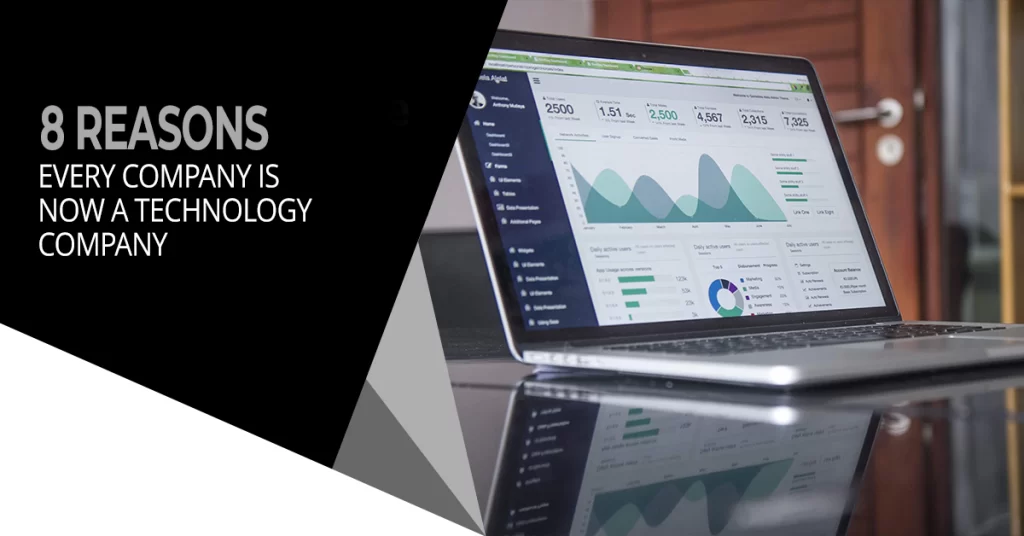
Whether you sell shoes or run an accounting firm, you need some type of technology to operate. Today’s companies are not just in the business of selling their own goods and services anymore. They also must master various types of digital tools which makes them a technology company.
These include software, payment systems, computers, Wi-Fi networks, mobile devices and more. Companies also need to protect their devices and network. If that technology isn’t working, it can impact a business significantly.
98% of surveyed organizations say that just one hour of IT downtime costs more than $100,000. The reliance on technology means that every company is now a technology company.
This is the case no matter what products you sell or services you provide. Let us discuss exactly why this is the case in today’s world.
What Makes Technology a Backbone of Any Business?
1. Technology Is a Critical Part of Business
Even farmers use tech to check commodity prices, sell livestock and keep their books. Most companies couldn’t operate without their software or without databases filled with important information.
IT downtime is so devastating for this very reason. Remember the breaches impacting global meat producer JBS and Colonial pipeline? Those companies had to halt operations because of ransomware attacks.
They both paid the ransom to their attackers so they could begin operating again. Without the technology that has become a normal part of our day, a lot of companies would close.
2. Customers Expect an Excellent Digital Experience
Customer experience came in first in a survey of top business priorities for the next 5 years. Nearly 46% of respondents said it was at the top of their list.
If a customer has just one bad experience with your company, they will likely go elsewhere. In a digital world, those experiences are often:
- Navigating your website
- Checkout experience
- Appointment scheduling ease
- Shipping notifications
- Helpfulness of online chat
- Response time from customer support
- Ability to contact your company via social media
In order to keep up with consumer expectations in 2023 and beyond, you need to use technology. From your website to your payment experience, people expect a smooth digital flow.
3. Employees Need Devices to Drive Productivity
How do employees work productivity without the use of a computer, tablet or mobile device? These devices keep staff connected to each other and your customer data. Devices enable communication and are how much of the work in offices gets done. If they don’t run well, business productivity suffers.
4. AI & Automation Help Companies Stay Competitive
AI and automation help organizations move faster. AI can personalize a consumer shopping experience. Automation can help sales teams close 30% more deals and improve conversions by over 200%.
To stay competitive, companies must integrate technology tools with AI and automation capabilities. This means they need to know the best ways to use these tools and integrate them well with existing solutions.
5. Information Is Being Generated at a Rapid Pace
Companies generate information digitally at a dizzying pace. Can you imagine what it would be like if you had to go back to all the paper files? You would need a separate building just for all of the filing cabinets.
Files, documents and customer records are largely digital now. Keeping track of all that information and making it searchable requires technology skills.
6. Vendors/Suppliers Are Leaving Legacy Systems Behind
Think of the vendors that you use to run your business. Could you interact with any of them offline only? No email? No digital documents? In most cases, the answer is, “No.”
The companies that you rely on for your business are also “technology companies” in the same way. Most will be leaving behind legacy systems like fax machines and paper documents. Thus, you need to use digital means to interact with them.
7. It is Difficult to Grow Without Tech Innovation
People are limited by what they can mentally and physically do in a day. Computers and technology have exponentially increased that. They do a lot of the processing and manual work.
The cloud is often touted as leveling the playing field for small businesses. It allows smaller companies to leverage technology to do more affordably.
It is hard to continue growing your business without the smart use of digital tools. This includes reviewing your technology infrastructure and looking at innovations on the horizon.
8. Business Continuity Needs
Business continuity is about keeping your company running despite any crisis events. One natural disaster could severely impact a building and everything in it. However, if you are storing your data in the cloud and using cloud software, your business can still operate.
Companies that are not employing backup systems are at significant risk. Tech solutions create the ability to continue operating from anywhere which increases business resiliency.
What Does Your Innovation Roadmap Look Like?
Using technology securely and to its fullest can be a full-time job. Give us a call today and we can help take that burden off of your shoulders and help you realize your full potential as a technology company.
Our quick-paced, digital-first environment is turning every business into a technology company and this trend shows no indication of slowing down. Only one factor—the application of technology—determines the state of a sector. Read more
The evolution of technology has frequently been consistent and current leading technologies tend to get quickly outdated. Statista's forecast on emerging technology trends shows that there would be a 104% increase between 2018 and 2023. Fields in these emerging techs include AR/VR, Internet of things software, metaverse, etc.
With this advancement, any business that wants to stay relevant and competitive will need to be ahead technologically and adopt the provisions of the new technologies to advance its operations.
As a result, knowing and understanding the technological trends anticipated for 2023 will help you know which one you can leverage in the coming months to improve your organization's efficiency, increase customer satisfaction, innovation and profitability and enable maximum productivity.
Although predicting how trends will develop can be difficult, some emerging technologies appear to have potential and are headed in the right direction for growth. They have potential and will support businesses as they set their path to growth and innovation.
This article contains the top 2023 technological trends your business can leverage in the coming months.
Top 2023 Technology Trends You Should Take Advantage Of
Adopting advanced technology trends for your business will inevitably lead it to get better. Leveraging them will optimize general operations, build business and system resilience and build trust in your industry. They will also increase your product delivery and enhance your customer interactions.
Here are some of these technology trends.
- Digital Immune System
The digital immune system incorporates a variety of risk reduction strategies and technologies to improve user experience and lower system failures that affect performance.
Observability, Chaos engineering, AI-augmented testing, Site Reliability Engineering (SRE), auto-remediation and Software Supply Chain Security are some of the key ideas behind digital immunity. They work together to guarantee that services are provided continuously, that systems don't crash and that errors are quickly fixed.
- Platform Engineering
Through self-service features and automation, platform engineering increases the developer experience, boosts productivity and speeds up the delivery of apps while fostering improved communication between operators and software developers. Through reusable tools and capabilities, it seeks to modernize enterprise software delivery.
Platform engineering seeks to create and redesign a platform utilizing standardized parts and automated procedures that are in tune with its end users' requirements, thereby improving end-user productivity and lessening the burden of the development team of your enterprise.
- Super-Apps
By creating super-apps, businesses can explore new approaches to client engagement. A super-app combines the features of a regular app with those of an app platform and an ecosystem. It creates a platform that enables end users to make their mini-apps.
Super apps have features that vary depending on the need of the customers. For example:
- Users can purchase and sell products and services within the app.
- The apps make provisions for users to order food and other things that will be delivered to their homes.
- The apps can be used to book transportation services.
- The apps can be used for payment, other financial transactions, and more.
This super-app technology can improve customer experience, general brand engagement and loyalty. They have the advantage of giving businesses access to a more significant client. Customers need to use the app to access various services and super apps allow companies to sell their goods and services and gather users' data. Also, users can quickly receive what they need due to the seamless customer experience created.
There are many benefits that super apps bring to your business which makes it a technology that you should leverage.
- Metaverse
The metaverse creates an online space where humans have a more engaging and immersive way and mode of communication. With a metaverse, you can virtually replicate physical activities. This can be achieved by transferring or extending real-world activities into virtual ones and altering the latter. It is a combined innovation composed of numerous technological capabilities and concepts.
In 2023, the metaverse will completely alter the customer experience. A more interconnected, immersive and secure digital world will be created where businesses and people can simulate real-life scenarios such as virtual houses, virtual business offices and shops, virtual roads and simulated travel experiences. AR/VR, AI/ML, Blockchain and IoT will work together to make this possible and significantly impact personal and commercial lives.
The metaverse also aids in creating new venues for customers to interact with brands and their products/services. They also allow new currencies to circulate widely in the market and develop innovative methods for collaboration among workers.
- AI TRiSM
Organizations are adopting an increasing number of Artificial Intelligence models. This increase may lead to an expansion in complexities for enterprises adopting this model. They must intensify efforts to ensure the credibility of the AI models they have chosen. Thus, there is a need for AI TRiSM.
AI TRiSM means AI Trust Risk and Security Management. It guarantees that AI model technologies perform their intended functions efficiently and safely. To preserve crucial operations of an organization, AI TRiSM helps to protect the shared data, protects privacy, manages governance and detects anomalies.
Ready To Adopt Technology Trends To Help Your Organization?
One of the best actions you can take for your organization is to invest in all it takes to grow. The technological growth of your organization is crucial to overall development and productivity.
At Sound Computers, we offer professional IT services with experts who can guide you into adopting new technological trends that can give you the best experience within the coming months and beyond.
Contact us for professional guidance at (860) 577-8060.