

In today's digital age, businesses heavily rely on technology to operate efficiently and serve their customers. However, when IT systems experience downtime, the consequences can be far-reaching and costly. Read more

Data is the lifeblood of modern businesses. It fuels insights, drives decision-making and ultimately shapes your company's success. However, in today's information age, data management can quickly become overwhelming.
Scattered spreadsheets, siloed databases and inconsistent formatting. All these create a data management nightmare. This hinders your ability to leverage this valuable asset.
Let this guide serve as your roadmap to data management success. We will explore the challenges of poor management and outline best practices for improvement. We will equip you with strategies to transform your company's data landscape. Read on to go from chaotic clutter to a well-organized and accessible source of truth.
The Pitfalls of Poor Data Management
The consequences of neglecting management of your data are far-reaching. Here is how poor data management can cripple your business:
Insufficient Operations
Struggling to find the data you need wastes time and resources. Manual processes for data analysis become cumbersome and error prone. This hurts your ability to operate efficiently.
Seventy-three percent of workers spend an average of 1-3 hours a day trying to find data.
Poor Decision-Making
Inconsistent or inaccurate data leads to flawed insights. Without reliable data, you risk making decisions based on faulty information. This could potentially jeopardize growth opportunities or hold back strategic initiatives.
Compliance Issues
Data privacy regulations are becoming increasingly stringent. Poor management of your data makes it difficult to comply with these regulations. This could result in hefty fines and reputational damage.
Reduced Customer Satisfaction
Inaccurate customer data leads to poor customer experiences. For example, incorrect contact information can hinder communication. Outdated customer preferences can result in irrelevant marketing campaigns.
Key Principles of Effective Data Management
Developing a robust data management strategy is crucial. It can unlock the true potential of your data. Here are the key principles to keep in mind:
- Data Governance: Establish clear ownership and accountability for data. Define roles and responsibilities for data creation, storage, access and maintenance.
- Data Quality: Install data quality measures. They should ensure data accuracy, consistency and completeness. Regular data cleansing processes are essential to remove errors and inconsistencies.
- Data Standardization: Establish data standards. They should ensure consistency in how your organization formats, stores and defines data. It should be the same across departments and systems.
- Data Security: Put in place robust security measures to safeguard sensitive data. They should protect data from unauthorized access, breaches or loss. Encryption, access controls and regular security audits are critical.
- Data Accessibility: Make data easily accessible to authorized users. This is for users who need it to perform their jobs. Streamline data access processes. Ensure users have the tools and training to locate and use data effectively.
Strategies for Effective Management
Transforming your company's data management approach requires a strategic plan. Here are some actionable strategies to consider:
- Conduct a Data Inventory: Identify all the data your company collects, stores and uses. Understand the purpose of each data set and how the organization is using it.
- Invest in Management Tools: Technology can be your ally in data management. Explore data management solutions. Look for features like data cleansing, data warehousing and data visualization.
- Develop Data Policies and Procedures: Document your data management policies and procedures. Outline data collection practices, data retention requirements and user access protocols.
- Foster a Data-Driven Culture: Encourage a data-driven culture within your organization. Emphasize the importance of data quality and responsible data usage. Train employees in best practices. Empower them to leverage data for informed decision-making.
- Embrace Continuous Improvement: Data management is an ongoing process. Regularly review your data management practices. Identify areas for improvement. Adapt your strategies as your company's data needs evolve.
The Benefits of Effective Data Management
Using these data best practices unlocks a world of benefits for your company:
Enhanced Operational Efficiency
Good management of your data leads to increased operational efficiency and productivity gains. It helps your business:
- Streamline workflows
- Improve data access
- Enjoy accurate data analysis
Data-Driven Decision Making
Reliable data empowers informed decision-making at all levels of the organization. Strategic initiatives become data driven. This leads to improved outcomes and a competitive advantage.
Improve Customer Experience
Accurate customer data allows for personalized marketing campaigns as well as targeted offerings and better customer service interactions. Up-to-date customer data also drives faster response times for support issues.
Reduced Risk of Compliance Issues
Robust data management practices make it easier to meet data privacy regulations. This minimizes legal risks and potential fines. It also makes it easier to put data security policies in place.
Unleashing the Power of Data Analytics
Clean and organized data fuels powerful data analytics. Gain deeper insights into things like:
- Customer behavior
- Operational performance
- Market trends
This enables you to make informed decisions that propel your business forward.
Getting Help Setting Up a Great Management System
Don’t let the influx of data bog your company down. Our team can help you set up an effective system that puts the power of data at your fingertips.
Contact us today to schedule a chat.

In today's fast-paced business world, small businesses are constantly seeking ways to streamline operations, increase efficiency and reduce costs. One of the most effective strategies to achieve these goals is leveraging information technology (IT) for task automation. Read more
Cyber threats are a perpetual reality for business owners. Hackers are constantly innovating. They devise new ways to exploit vulnerabilities in computer systems and networks.
For businesses of all sizes, a proactive approach to cybersecurity is essential. One of the most crucial elements of this approach is regular vulnerability assessments. A vulnerability assessment is a systematic process. It identifies and prioritizes weaknesses in your IT infrastructure that attackers can exploit.
Some businesses may be tempted to forego vulnerability assessments. They might think it is too costly or inconvenient. Small business leaders may also feel it is just for the “big companies.” However, vulnerability assessments are for everyone regardless of the company's size. The risks associated with skipping them can be costly.
In 2023, there were over 29,000 new IT vulnerabilities discovered. That is the highest count reported to date.
In this article, we explore the critical role of vulnerability assessments as well as their benefits and how they help to maintain a robust cybersecurity posture. We will also look at the potential consequences of neglecting them.
Why Vulnerability Assessments Matter
The internet has become a minefield for businesses. Cybercriminals are constantly on the lookout for vulnerabilities to exploit. Once they do, they typically aim for one or more of the following:
- Gain unauthorized access to sensitive data
- Deploy ransomware attacks
- Disrupt critical operations
Here is why vulnerability assessments are crucial in this ever-evolving threat landscape:
- Unseen Weaknesses: Many vulnerabilities remain hidden within complex IT environments. Regular assessments uncover these weaknesses before attackers can exploit them.
- Evolving Threats: Experts discover new vulnerabilities all the time. Regular assessments ensure your systems are up to date and that they are protected from potential security gaps.
- Compliance Requirements: Many industries have regulations mandating regular vulnerability assessments. This helps to ensure data security and privacy compliance.
- Proactive Approach vs. Reactive Response: Identifying vulnerabilities proactively allows for timely remediation. This significantly reduces the risk of a costly security breach. A reactive approach is where you only address security issues after an attack. This can lead to significant financial losses and disruptions to your business.
The High Cost of Skipping Vulnerability Assessments
Some business owners might think vulnerability assessments seem like an unnecessary expense. However, the cost of neglecting them can be far greater. Here are some potential consequences of skipping vulnerability assessments:
Data Breaches
Unidentified vulnerabilities leave your systems exposed. This makes them prime targets for cyberattacks. Just one breach can result in the theft of sensitive data and customer information.
Financial Losses
Data breaches can lead to hefty fines and legal repercussions as well as the cost of data recovery and remediation. Business disruptions caused by cyberattacks can also result in lost revenue and productivity.
The current average cost of a data breach is $4.45 million. This represents an increase of 15% over the last three years. These costs continue to increase and make cybersecurity a necessity for ongoing business survival.
Reputational Damage
A security breach can severely damage your company's reputation. It can erode customer trust and potentially impact future business prospects. Both B2B and B2C customers hesitate to do business with a company that has experienced a breach.
Loss of Competitive Advantage
Cyberattacks can cripple your ability to innovate and compete effectively. This can hinder your long-term growth aspirations. Rather than forward motion on innovation, your company is playing security catch-up.
The Benefits of Regular Vulnerability Assessments
Regular vulnerability assessments offer a multitude of benefits for your business:
- Improved Security Posture: Vulnerability assessments identify and address vulnerabilities. This means you significantly reduce the attack surface for potential cyber threats.
- Enhanced Compliance: Regular assessments help you stay compliant with relevant industry regulations as well as data privacy laws your business is subject to.
- Peace of Mind: Knowing your network is secure from vulnerabilities gives you peace of mind. It allows you to focus on core business operations.
- Reduced Risk of Costly Breaches: Proactive vulnerability management helps prevent costly data breaches as well as the associated financial repercussions.
- Improved Decision-Making: Vulnerability assessments provide valuable insights into your security posture. This enables data-driven decisions about security investments and resource allocation.
The Vulnerability Assessment Process: What to Expect
A vulnerability assessment typically involves several key steps:
- Planning and Scoping: Define the scope of the assessment. This includes outlining what systems and applications are part of the evaluation.
- Discovery and Identification: Use specialized tools and techniques to scan your IT infrastructure. They will look for known vulnerabilities.
- Prioritization and Risk Assessment: Classify vulnerabilities based on severity and potential impact. Focus on critical vulnerabilities that need immediate remediation.
- Remediation and Reporting: Develop a plan to address identified vulnerabilities. This should include patching, configuration changes and security updates. Generate a detailed report that outlines the vulnerabilities found as well as their risk level and remediation steps taken.
Investing in Security is Investing in Your Future
Vulnerability assessments are not a one-time fix. Your business should conduct them regularly to maintain a robust cybersecurity posture. By proactively identifying and addressing vulnerabilities, you can:
- Significantly reduce your risk of cyberattacks
- Protect sensitive data
- Ensure business continuity
Remember that cybersecurity is an ongoing process. Vulnerability assessments are a vital tool in your security arsenal. Don't gamble with your organization's future. Invest in vulnerability assessments and safeguard your valuable assets.
Contact Us Today to Schedule a Vulnerability Assessment
When was the last time your business had any vulnerability testing? We can help regardless of the size of your business. Our vulnerability assessment will look for any weaknesses in your infrastructure. Then we can take the next steps and provide you with actionable recommendations.
Contact us today to schedule a vulnerability assessment for better security.

Calendars, task lists and project planning are important business tools. Many people use Microsoft’s apps to power these processes including Microsoft Planner, Microsoft To Do and Project for the web.
These tools help keep processes on track and enable task accountability. However, they are separate apps. Switching between apps can be cumbersome. It adds more complexity to a workflow.
On average, employees switch between 22 different apps 350 times per day.
Microsoft is putting a dent in app overload. The company is rolling out a brand-new version of Microsoft Planner in early 2024. It is packed with exciting features designed to simplify your project management journey.
What apps does the new Planner include?
The new Microsoft Planner combines:
- The current Planner’s collaboration features
- The simplicity of Microsoft To Do for task management
- The capabilities of Microsoft Project for the web
- The automation of Microsoft Copilot (the company’s AI companion)
The new Planner promises to be a powerful tool for staying organized as well as boosting collaboration and achieving your goals with more ease.
Unifying Your Workflow: Tasks, Plans & Projects in One Place
Say goodbye to juggling several apps and hello to a streamlined experience. The new Planner goes beyond basic to-do lists. It seamlessly integrates tasks, plans and projects under one roof.
This means you can manage everything from large to small including simple daily tasks to complex multi-phased projects. You can do it all within a single intuitive interface.
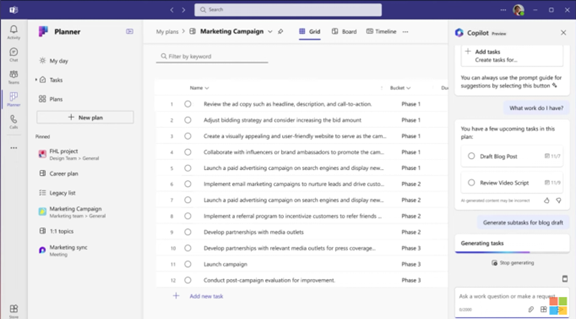
You can use the new Microsoft Planner from within Microsoft Teams or via a web browser. Here are some of the exciting things you will be able to do with it.
Enhanced Collaboration: Working Together Made Easy
Collaboration is key in today's fast-paced world. Working remotely has become the new normal. This means that the tools need to keep people coordinated wherever they are.
The new Planner empowers teams to work together seamlessly. Real-time updates ensure everyone stays on the same page. Features like shared task ownership and comments foster clear communication and efficient collaboration.
AI-Powered Insights: Your Smart Copilot for Success
The new Planner incorporates the power of AI with Microsoft Copilot built in. This intelligent assistant helps you stay on top of your work. It can suggest relevant plans, tasks and goals based on your needs and context. It can even analyze your progress and suggest adjustments to keep you on track.
Scaling with Your Needs: From Simple Tasks to Enterprise Projects
One size doesn't fit all. The new Planner understands that. It offers flexibility to cater to both individual needs and complex enterprise projects. Microsoft Planner can adapt to your specific requirements. It is flexible for use to fill big or small needs. Use it for managing a personal grocery list or to plan and deploy a large-scale company transformation.
Pre-Built Templates: Get Started Fast & Save Time
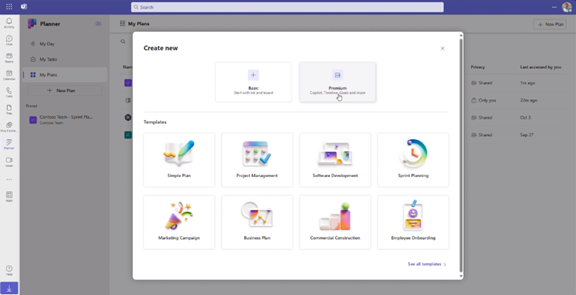
You don’t need to start from “square 1” unless you want to. Microsoft Planner provides several ready-made templates. You can use these to get started on a new project or goal quickly.
You will see templates for things like:
- Project Management
- Software Development
- Sprint Planning
- Marketing Campaign
- Commercial Construction
- Employee Onboarding
Here is a sneak peek at some key features of the new Microsoft Planner 2024:
- Improved Navigation: A redesigned interface makes finding what you need faster and easier.
- Enhanced Task Views: It has different views (like grid and board views). These let you customize how you see and organize your tasks.
- Microsoft App Integration: Planner integrates with many Microsoft tools including Power BI, Teams, Microsoft Viva Goals, Power Automate and more.
- Customizable Fields: Add custom fields to tasks. Use them to capture specific information relevant to your project needs.
- Goal Setting: Define clear goals and track progress visually within your plans.
- Critical Path: Identify the essential tasks needed to complete your project on time.
- Improved Search: Find the information you need quickly and easily. The app has powerful search functionality.
Access and Availability
Mark your calendars! The new Planner will be available in preview in early 2024. It will become generally available soon after. Some features will roll out later in the year. You can visit Microsoft’s site to sign up for updates and see a feature roadmap.
The Future of Tasks, Planning & Project Management
The new Microsoft Planner 2024 is an example of a trend that we have seen in the digital world. Less is more. This means fewer apps to juggle and more streamlined interfaces.
Planner’s powerful features make it an invaluable tool that both individuals and teams alike can leverage to streamline workflows. It also has an intuitive interface and AI-powered assistant to drive productivity.
Get Expert Business Software Support & Management
Managing both legacy and new cloud tools can be complex. Features often go underutilized and security can be a big problem if it is not done right. Our team of business software experts is here to help you.
Contact us today to schedule a chat.

In today's fast-paced business world, technology has become an indispensable tool for enhancing productivity and driving success. Companies that embrace the latest technological advancements often gain a competitive edge over their rivals. Read more

The Internet of Things (IoT) is no longer a futuristic concept. It is rapidly transforming industries and reshaping how businesses operate. IoT is a blanket term to describe smart devices that are internet enabled. One example is smart sensors monitoring production lines. Connected thermostats optimizing energy consumption is another.
Experts project the number of connected devices worldwide to continue growing. It is estimated to rise from about 15 billion in 2023 to 21 billion in 2026.
IoT devices are weaving themselves into the fabric of modern business operations. Successfully deploying them on your existing network isn’t always easy. It can feel like navigating a maze.
Have you been struggling with the integration of smart devices? This guide will equip you with the knowledge and steps you need.
Step 1: Define Your Goals and Needs
Before diving headfirst, it is crucial to have a clear vision of your goals. Ask yourself and your team a few questions. These questions will help ensure you are aligning smart devices with business needs.
What problem are you trying to solve with IoT?
Are you aiming to improve operational efficiency? Do you want to gain real-time data insights? Maybe you want to enhance remote monitoring capabilities.
It is important to target your IoT device deployment. Defining the issue that it is meant to solve helps you do that.
What type of data will you be collecting?
Take time to define the nature and volume of data generated by your chosen devices. This is essential for choosing the right network infrastructure.
What level of security do you need?
Security measures depend on the sensitivity of the data collected. You might need specific measures to protect it from unauthorized access.
Go through these questions as a first step. You will gain a clearer picture of your specific needs. This enables you to select the most appropriate IoT devices and network solutions.
Step 2: Select the Right Devices and Network Infrastructure
With your goals in mind, it is time to choose your components. You will want to look at both the devices and the infrastructure of the network.
IoT Devices
When choosing smart devices, consider factors like:
- Compatibility with your existing infrastructure
- Data security features
- Scalability
- Power requirements
Research reputable vendors. Choose devices with strong security protocols in place. Look for good firmware protection.
Network Infrastructure
Your existing network might be lacking. It may not be equipped for the extra traffic and data generated by IoT devices. You may need to upgrade your bandwidth as well as deploy separate networks for IoT devices. You may also need to invest in dedicated gateways that can manage communication between devices and the cloud.
Step 3: Focus on Security Throughout the Journey
Security is paramount in the realm of IoT. Compromised devices can become gateways for cyberattacks. Malware attacks on IoT devices increased 77% during the first half of 2022.
Here are some key security considerations.
Secure the Devices
Ensure the chosen devices have strong passwords. They should also be regularly updated with the latest firmware. You want to choose devices that offer features like encryption and secure boot.
Secure the Devices
Create separate networks for IoT devices and critical business systems. This minimizes the potential impact of a security breach on your core operations.
Install Network Access Control (NAC)
Install NAC solutions such as multi-factor authentication. These controls restrict access to your network only to authorized devices. They also help you enforce security policies automatically.
Track and Maintain
Continuously track your network for suspicious activity. Regularly update your security protocols and software to stay ahead of evolving threats.
Step 4: Deployment and Ongoing Management
You should now have the necessary hardware and security measures in place. It is time to deploy your IoT devices.
Here are some tips:
- Follow the manufacturer's instructions carefully during installation and configuration.
- Test and confirm the functionality of your IoT devices. You should do this before fully integrating them into your network.
- Develop a comprehensive management strategy for your IoT devices. It should include regular maintenance, firmware updates and issue monitoring.
Step 5: Continuous Learning and Improvement
The world of IoT is constantly evolving and so should your approach. Here are some tips for continuous improvement.
Analyze the Data
Once your IoT devices are operational, analyze the collected data. This helps you gain insights, identify areas for improvement and refine your strategy.
Embrace Feedback
Encourage feedback from stakeholders within your organization. Use it to constantly refine your implementation and address emerging challenges.
Stay Informed
Keep yourself updated on the latest trends and advancements in the IoT landscape. This empowers you to adapt and leverage new technologies as they emerge.
Successfully deploying IoT on your business network requires careful planning as well as prioritization of security and a commitment to continuous improvement.
Get Expert Help for Your Network Devices
Need help embracing a proactive approach to IoT adoption? We can help you transform your business operations as well as unlock the full potential of smart devices at your business.
Contact us today to learn more.

In today's digital landscape where cyber threats are constantly evolving and becoming more sophisticated, ensuring the security of your organization's systems and data is paramount. Cybersecurity is no longer a one-time effort. It is an ongoing process that requires constant vigilance and proactive measures.
Read more
With cyber threats evolving at an alarming pace, staying ahead of the curve is crucial. It is a must for safeguarding sensitive information. Data security threats are becoming more sophisticated and prevalent. The landscape must change to keep up. In 2024, we can expect exciting developments alongside persistent challenges.
Over 70% of business professionals say their data privacy efforts are worth it and that their business receives “significant” or “very significant” benefits from those efforts.
Staying informed about these trends is crucial. This is true whether you are an individual or a business safeguarding valuable data.
Here are some key areas to watch.
1. The Rise of the Machines: AI and Machine Learning in Security
Artificial intelligence (AI) and machine learning (ML) are no longer futuristic concepts. They are actively shaping the cybersecurity landscape. This year, we will likely see a further rise in their application:
- Enhanced Threat Detection: AI and ML algorithms excel at analyzing massive datasets. This enables them to identify patterns and anomalies that might escape human notice. This translates to a quicker detection of and reaction to potential cyber threats.
- Predictive Analytics: AI can predict potential vulnerabilities and suggest proactive measures. It does this by analyzing past cyberattacks and security incidents.
- Automated Response: AI can go beyond detection and analysis. Professionals can program it to automatically isolate compromised systems as well as block malicious activity and trigger incident response procedures. This saves valuable time and reduces the potential impact of attacks.
AI and ML offer significant benefits. However, it is important to remember they are tools and not magic solutions. Deploying them effectively requires skilled professionals who can interpret the data and make informed decisions.
2. Battling the Ever-Evolving Threat: Ransomware
Ransomware is malicious software that encrypts data and demands a ransom for decryption. It has been a persistent threat for years. Unfortunately, it is not going anywhere in 2024. Hackers are constantly refining their tactics and targeting individuals and businesses alike. Here is what to expect:
- More Targeted Attacks: Hackers will likely focus on meticulously selecting high-value targets such as critical infrastructure or businesses with sensitive data. They do this to maximize their impact and potential payout.
- Ransomware-as-a-Service (RaaS): This enables those with limited technical expertise to rent ransomware tools. This makes it easier for a wider range of actors to launch attacks.
- Double Extortion: Besides encrypting data, attackers might steal it beforehand. They then may threaten to leak it publicly if the ransom isn't paid which adds pressure on victims.
3. Shifting Strategies: Earlier Data Governance and Security Action
Traditionally, companies have deployed data security measures later in the data lifecycle (such as after data has been stored or analyzed). A new approach towards earlier action is gaining traction in 2024. This means:
- Embedding Security Early On: Organizations are no longer waiting until the end. Instead, they will integrate data controls and measures at the start of the data journey. This could involve setting data classification levels as well as putting in place access restrictions. They will also be defining data retention policies early in the process.
- Cloud-Centric Security: More organizations are moving towards cloud storage and processing. As they do this, security solutions will be closely integrated with cloud platforms. This ensures consistent security throughout the entire data lifecycle.
- Compliance Focus: Data privacy regulations like GDPR and CCPA are becoming increasingly stringent. As this happens, companies will need to focus on data governance to ensure compliance.
4. Building a Fortress: Zero Trust Security and Multi-Factor Authentication
We are in a world where traditional perimeter defenses are constantly breached. This is why the "Zero Trust" approach is gaining prominence. This security model assumes that no user or device is inherently trustworthy. Users and programs need access verification for every interaction. Here is how it works:
- Continuous Verification: Every access request will be rigorously scrutinized. This is regardless of its origin (inside or outside the network). Systems base verification on factors like user identity, device, location and requested resources.
- Least Privilege Access: Companies grant users the lowest access level needed to perform their tasks. This minimizes the potential damage if hackers compromise their credentials
- Multi-Factor Authentication (MFA): MFA adds an important extra layer of security. It requires users to provide extra factors beyond their password.
5. When Things Get Personal: Biometric Data Protection
Biometrics include facial recognition, fingerprints and voice patterns. They are becoming an increasingly popular form of authentication. However, this also raises concerns about the potential for misuse and privacy violations:
- Secure Storage Is Key: Companies need to store and secure biometric data. This is ideally in encrypted form to prevent unauthorized access or breaches.
- Strict Regulation: Expect governments to install stricter regulations. These will be around the collection, use and retention of biometric data. Organizations will need to ensure they adhere to evolving standards. They should also focus on transparency and user consent.
How to Prepare for Evolving Data Security Trends
Feeling a bit overwhelmed? Don't worry! Here are some practical steps you and your organization can take:
- Stay Informed
- Invest in Training
- Review Security Policies
- Embrace Security Technologies
- Test Your Systems
Schedule a Data Security Assessment Today!
The data security landscape of 2024 promises to be both intriguing and challenging. We can help you navigate this evolving terrain with confidence.
A data security assessment is a great place to start. Contact us today to schedule yours.

In an era where digital threats loom large, fostering a cyber-aware company culture has become imperative for organizations of all sizes. With cyber attacks on the rise, it is not just IT departments that need to be vigilant. Every employee plays a crucial role in safeguarding sensitive data and preventing breaches. In this article, we will delve into ten important strategies for developing a cyber aware company culture that empowers employees to recognize, respond to and mitigate cyber threats effectively.Read more