
Has your company hit a technology sticking point? That is when it seems like things are in a rut with your IT infrastructure and you know there are ways to improve but you are not quite sure how to get there.
According to a study by Google, 80% of small businesses are not taking full advantage of technology optimizations. This means they tend to make half as much revenue per employee as firms that are more digitally advanced.
There are a number of technology upgrades that your Connecticut business can do to improve your network and IT systems to boost efficiency and increase employee productivity.
You would be surprised how just a few tweaks here and there can free up more hours per day due to faster devices, faster networks and freedom from IT struggles that eat into daily work time.
Make Your Business Better with These Technology Upgrade Tips
The cost of using outdated systems and not updating your technology infrastructure can come through a number of ways. It is estimated that employees waste 22 minutes each per day due to tech issues which adds up to over 2 weeks per year in lost productivity. Multiply that by the number of employees that you have and that is a lot of time wasted on tech issues!
Another way that using outdated systems can slow your company down is if your network can’t reliably support all of your devices. In the last decade, multiple mobile and IoT devices have been added to the work process, putting more demands on networks which can slow down if there is too much traffic demand.
Here are several ways you can improve productivity by deploying key upgrades in your network and other IT systems.
Transition from One Router to a Multi-Access Point Mesh System
If you have just a single router at your office, it can mean weak and spotty connections for some users because they are so far from the router. Solid block walls and large furniture can also interfere with Wi-Fi signals, leaving “dead zones” that you have to work around.
Mesh Wi-Fi systems use multiple access points instead of just one to blanket your premises with a net of connectivity. This speeds up connections, avoids router device overload and eliminates problems with weak or zero signal areas.
Upgrade User Computers
Companies will often hold onto computers as long as possible without replacing or upgrading them so they can get the most money possible out of the investment.
Often employees are struggling with slow systems that are keeping them from doing their jobs as fast as they could do them with the right tools. However, executives are often in the dark about this.
While 90% of company leaders say they are giving their team the best digital tools, only 53% of employees think so.
Upgrades that can speed up your existing workstations include:
- Switching out hard disk drives (HDDs) for solid-state drives (SDD)
- Adding more memory
- Replacing the graphics card
- Getting a system tune-up from an IT professional
Migrate to an Integrated “All-in-One” Cloud Platform
Most work is now being done in cloud software applications and these can either make work easier or be holding you back. If your team has to use tools from many different providers and learn all those different interfaces, it can make their workflow less productive.
By migrating to an “all-in-one” cloud platform like Microsoft 365, you can give your employees a much more optimized cloud experience that includes multiple tools that share data and all work together and have a similar user interface.
Digitize Your Document Flow
Are you still using some paper documents in your workflows? These can slow people down and cause bottlenecks in project processes.
A digital signature tool can remove the need to print out and store paper documents for things like contracts and vendor agreements. By going fully digital, you are able to have all documents easily searchable, secured and won’t have any manual paper processes slowing your team down.
Switch from Landline Phones to a VoIP System
The recent pandemic-related shutdowns emphasized the need for businesses to have processes that could be run from any location and support a remote workforce.
Communications like your business phone lines are a vital piece of the day-to-day in a company and if you are still using older landline phones, it can be slowing your team down and making it more difficult for you to provide a consistent caller experience.
VoIP systems offer several productivity boosts to communication including a full enterprise-class phone system with multiple features (auto attendant, call handling etc.) and they allow your phone system to be accessible by computer, mobile device or VoIP desk phone.
Cloud phone systems integrate other communication features like digital fax, video calling, texting and automated voicemail transcription which improves productivity while also reducing phone operational costs.
Let Sound Computers Help You with a Productivity Upgrade
Often, upgrades to your network and systems pay for themselves fast in productivity improvements. Let us help you identify your best areas to optimize to improve your company efficiency.
Contact us today to schedule a free consultation. Call 860-577-8060 or reach us online.

This era has put every single organization in the whirl of technology so now most enterprises are utilizing computer technology to run their businesses. In fact, a recent case study shows that we have over 2 billion computers in the world as of 2019. Moreover, we have 5.11 million unique mobile users too! Many companies have entire IT departments while others hire a professional or two to cater to digital needs.
Read more
Strategic approaches and innovations are part and parcel of informational technology and related fields. Managed service provider (MSP) is another innovation that is partially related to the subscription model. (For more information on what an MSP is, visit this site for more information.)
The majority of the companies are more toward the services which are in the market and required by the IT support. They don’t feel the need of using the services which are related to a subscription model or the relatively new services.
Reasons for using MSP:
One of the reasons for the rapidly growing popularity of Managed Service Provider is the factor of stability. The MSP ensures the stability of the clients and is said to be inexpensive as well. However, another reason why companies are preferring MSP can be the usage of cloud servers. Companies are now digitizing their operations and for that they are using MSP.
MSP and IT support:
Managed Service Provider helps the company to notice the technical issues beforehand. This helps the company to understand the minor issues and also eradicates the chance of losses. However, regular maintenance and proactive services are required by the company to make sure that the network runs smoothly and effectively.
Benefits of utilizing MSP:
Managed Service Providers can be amazingly beneficial. This is especially true for the companies that need technical support and expertise. Maintaining the IT infrastructure can be difficult for companies which is one of the reasons for the preference of MSP. Mitigating the security threats and increasing the life span of the devices are two important factors of the Managed Service Provider.
1. Centralizing the network: System centralization is extremely beneficial as it consumes all the data in a single unit which helps in centralizing the network. Moreover, centralization speeds up the processes and improves the company data.
2. Increased support: System management and continuous monitoring help the IT system to be upgraded with no risk and increased cost. The systems will be updated without any support.
3. Efficient IT budget: MSP helps in budgeting the IT services in the most efficient manner. MSP will allow the systems to be updated without any extra cost which will eventually decrease hardware and maintenance costs.
4. Security and safety of the data: Outsourcing the data with MSP is no longer problematic as MSP is designed in such a way that it ensures the data management regulations and provides backup of the systems.
5. High-level productivity: MSP addresses the technical issues beforehand which saves a lot of time and money. Therefore, with the help of MSP, there will be minimal system failures and breakdowns which will help the employees to work more efficiently and productively.
6. Accountability of the service provider: The specialists associated with MSP are professional people with extensive IT knowledge which can help and guide you at every step. The employees can focus on their work while the assigned specialist takes care of the IT issues.
Nonetheless, to use any service one needs to study and explore it. To get a reliable service, you must look for a specialist who can guide you through the whole process.


It is an overwhelming decision to change traditional methods in business. But is it worth it? Most of the time, yes!
Reaching new levels in your business might mean there is a need for improved technologies to excel in this modern world. This is the case in implementing an ‘Enterprise Resource Planning’ system which is commonly known as the “ERP” system. As the name suggests, it helps businesses to resolve complex issues. It is advanced software that has now been adopted by more than 40% of corporations to increase their productivity.
The real question is, “Does it help to improve the productivity of any business?”
A business is more likely to boost sales when managed efficiently and employing time-saving measures. A solid ERP system implemented with the correct features can make a big difference when it comes to common inventory problems.
Today there are several issues driving manufacturing business such as labor turnover rates and even outsourcing making it less profitable. A successful business requires effective strategies to maximize profits with minimal resources. How do you do the same amount of work with less people and not burn them out? ERP is the solution to these modern problems whether be it resource planning or management issues.
Don’t stress about little things you cannot change. Start to focus on big things that you can change or improve. If you are thinking about how to share your burden with an ERP system and how it works, here is how it will help to increase productivity in manufacturing businesses:
Time saver:
Imagine what could have been done with that time that you spent organizing databases and order arrangements. Time is precious. Save it to spend on what grows your business. The best way you can buy yourself some extra time is by getting auxiliary help. This is where ERP comes in and saves a ton of your time by managing huge files sophisticatedly. It can manage the entire resources of your business from Human Resources to Finances and Clients.
Manages excel files:
What has been the most tiring of all tasks? Managing those immensely large excel sheets and keeping a check on them regularly. When I said it solves all the problems, I meant it. ERP systems will help you with all the complex processes despite the size and level of the organization. It can automatically get updates on information and maintains the flow of databases. Getting an awesome ERP system will cut down labor and save an enormous amount of time and energy.
Cost-reduction:
It drastically reduces the cost of labor and outsourcing which eventually helps to improve the quality of the product. When the quality of a product is upgraded, it affects sales and drives more clients towards you. It drops administrative expenses as well as operative costs. The costs saved from these processes can be reutilized for bigger and lucrative purposes.
It also reduces the amount of time spent digging around for human errors. Your finance department will thank you because the amount of inventory errors and shipping issues will decrease. Cycle counts and physical inventories will be a breeze. Workers will be happier and take pride in what they are able to accomplish without burning out. That leads to better employee retention and an invaluable knowledge base in those employees that stick around long term.
All three of the privileges above are interrelated to the effective management of business and ERP is a comprehensive way to increase parameters of each performance: gathering, editing, updating and managing information and databases. Most of the companies have already switched to ERP systems to improve productivity and minimize investment. In this continuously upgrading world, to run a successful business and to compete with large firms it is essential to keep up with the most modern ways to handle traditional problems at a low cost. An ERP system can transform methods to generate maximum workflow and maintaining product quality.

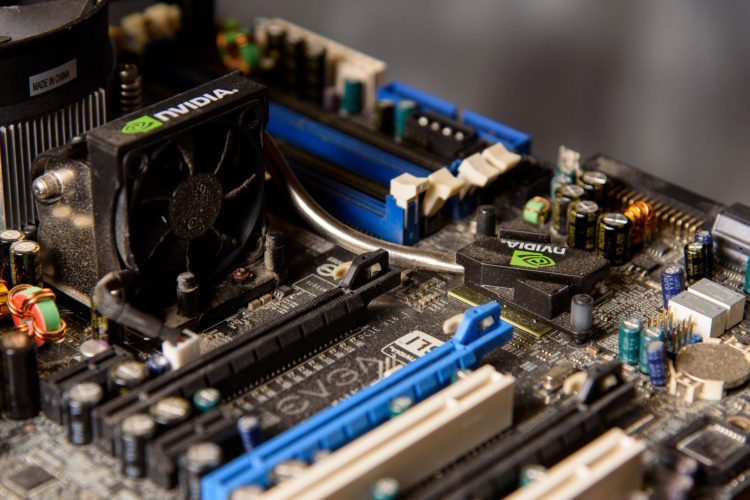
This question troubles a lot of people because it deals with the nuts and bolts of your network operations and also demands investing a hefty amount of money.
It is true that servers cost a lot. The question is if they cost more than the downtime caused by an aging server. Certainly not. Imagine the loss of precious data and potentially the loss of clients when the server goes down repeatedly despite multiple troubleshooting attempts. We are having a hard time imagining such a dreadful situation and surely you are too.
Microsoft’s Todd Brix recently updated the Windows blog with news that the company has removed more than 1500 apps from the Windows and Windows Phone Stores. He said that the developers behind these apps were “less receptive” to new policies regarding the app submission and listing process. These new policies are in place thanks to previous customer feedback.
Read more